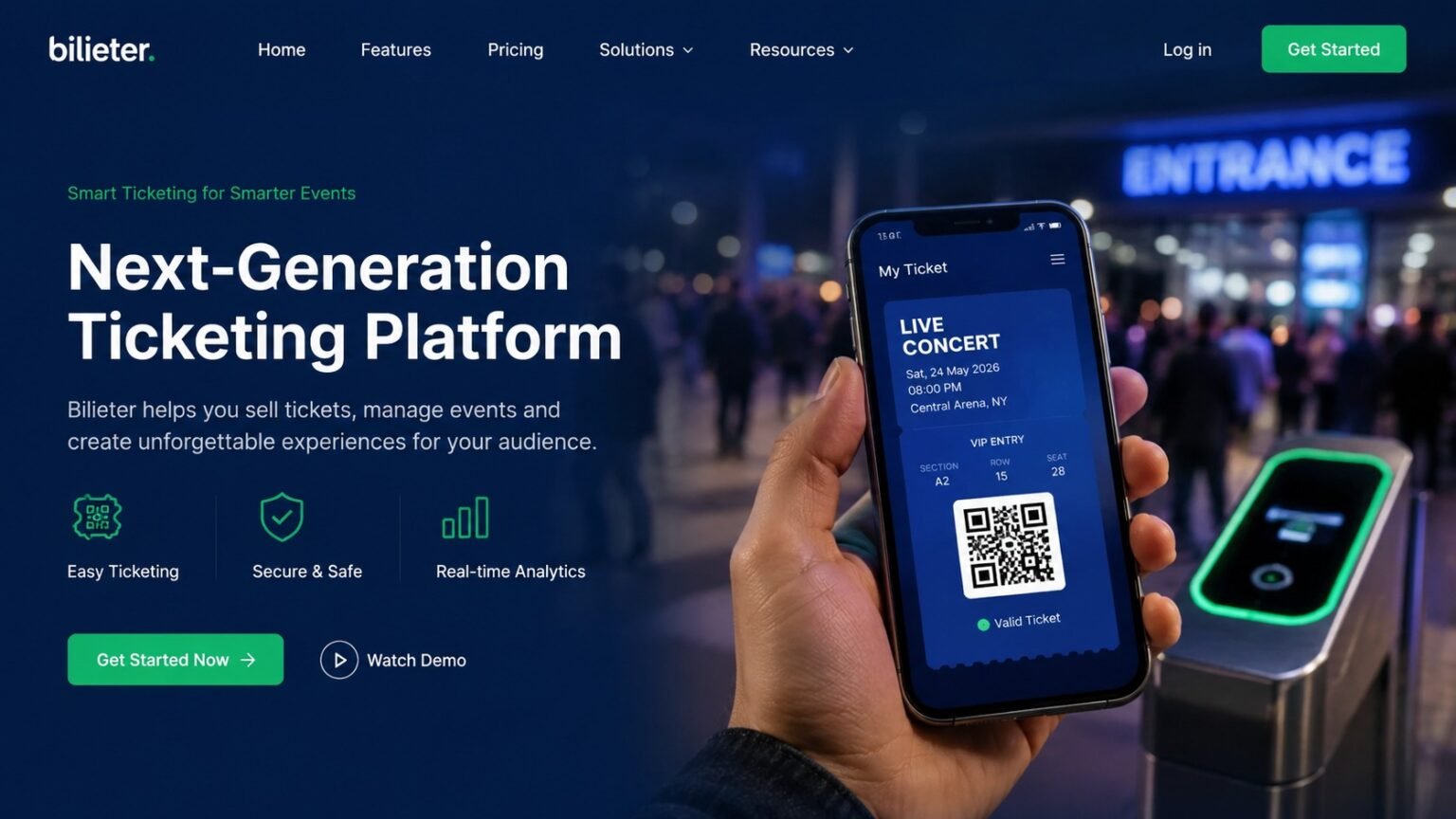
Digital ticketing has transformed how people access concerts, sports events, conferences, tourist attractions, and public transportation. Instead of relying on printed tickets, organizations increasingly use secure electronic tickets that can be purchased, stored, and validated through websites or mobile devices.
The widespread adoption of QR codes, cloud-based platforms, and contactless entry has made ticket management faster and more efficient. Industry sources also note that the term “Bilieter” has recently appeared online in connection with modern digital ticketing concepts, although it is not yet a widely established or standardized industry term.
This guide explains what Bilieter generally refers to, how modern digital ticketing systems work, their advantages, and why intelligent ticket management has become increasingly important for businesses and event organizers.
What Is Bilieter?
Bilieter is generally used online to describe a modern approach to digital ticketing and access management. Rather than representing a universally recognized technology standard, the term is commonly associated with cloud-based ticketing platforms that simplify ticket sales, attendee management, and electronic entry verification. Some sources also connect the word with historical ticket-handling roles or linguistic variations of words meaning “ticket.”
In practical terms, a Bilieter-style system focuses on replacing traditional paper tickets with secure digital alternatives. Customers purchase tickets online and receive electronic tickets through email, mobile applications, or digital wallets. These tickets typically contain unique QR codes or barcodes that are scanned upon entry.
Modern digital ticketing platforms often include:
- Online ticket sales
- Secure payment processing
- QR code generation
- Mobile ticket delivery
- Contactless check-in
- Attendance tracking
- Customer management
- Sales reporting
The overall goal is to improve convenience for customers while reducing administrative work for organizers.
How Bilieter Works in Modern Digital Ticketing
Modern ticketing platforms automate nearly every stage of the ticket lifecycle.
The process typically begins when a customer purchases a ticket through an event website or mobile application. Once payment is confirmed, the system instantly creates a unique digital ticket containing encrypted identification data.
The customer receives the ticket through email or a mobile wallet. Upon arriving at the venue, staff members scan the QR code using a smartphone or dedicated scanning device. The system checks the ticket against a centralized database in real time before granting entry.
A typical workflow includes:
| Stage | What Happens |
| Ticket purchase | Customer selects tickets and completes payment |
| Ticket generation | System creates a unique digital ticket |
| Ticket delivery | Ticket is sent electronically |
| Entry verification | QR code is scanned and validated |
| Attendance reporting | Organizer receives live attendance data |
Because each ticket contains unique identification information, duplicate or previously used tickets can usually be detected immediately.
The Rise of AI-Powered Ticketing Systems
Artificial intelligence is becoming an increasingly valuable part of digital ticketing.
Rather than simply selling tickets, modern platforms analyze customer behavior and automate many routine tasks. AI helps organizers understand demand patterns, predict attendance, recommend pricing strategies, and improve customer support.
Common AI-powered capabilities include:
- Demand forecasting
- Dynamic pricing recommendations
- Fraud detection
- Personalized event suggestions
- Automated customer service chatbots
- Sales performance analysis
For example, if ticket sales begin slowing several weeks before an event, AI may recommend promotional campaigns or pricing adjustments based on historical purchasing trends.
Key Benefits of Bilieter for Event Organizers
Managing an event involves much more than selling tickets. Organizers must control venue access, monitor attendance, reduce fraud, and deliver a smooth visitor experience. Modern digital ticketing systems help simplify these responsibilities through automation and real-time data.
Some of the most important benefits include:
Enhanced Security
One of the biggest advantages of digital ticketing is improved security. Every electronic ticket contains a unique identifier that is checked against a central database before entry is approved. This significantly reduces the chances of duplicate tickets, unauthorized access, and counterfeit copies.
Faster Entry
Long queues can negatively affect the attendee experience. QR code scanning takes only a few seconds, allowing visitors to enter venues quickly while reducing congestion at entrances.
Lower Operating Costs
Traditional paper tickets require printing, distribution, and manual verification. Digital ticketing removes many of these expenses, helping organizations lower operational costs while simplifying administration.
Real-Time Reporting
Event managers can monitor ticket sales and attendance as events happen. Live dashboards provide valuable insights into visitor numbers, check-in rates, and ticket usage, allowing organizers to make informed operational decisions.
Better Customer Experience
Customers appreciate the convenience of purchasing tickets online and storing them on their smartphones. Digital tickets are easy to access, difficult to lose, and can often be transferred or updated without needing physical replacements.
Bilieter and the Evolution of Contactless Experiences
Consumer expectations have changed significantly in recent years. People increasingly prefer services that are quick, convenient, and require minimal physical interaction. Digital ticketing aligns with these expectations by enabling contactless entry and reducing reliance on printed documents.
Instead of presenting paper tickets, visitors simply display a QR code or barcode on their mobile device for scanning. This process is faster than manual ticket inspection and minimizes physical contact between staff and attendees.
Contactless ticketing offers several practical advantages:
- Faster venue entry
- Reduced waiting times
- Lower paper consumption
- Improved operational efficiency
- Better visitor convenience
- Simplified event management
These benefits have encouraged organizations across many industries to adopt digital-first ticketing solutions.
Industries That Benefit Most from Bilieter Technology
Although digital ticketing is often associated with concerts and sporting events, many industries now rely on electronic ticket management.
Entertainment and Live Events
Music festivals, theaters, sports venues, comedy shows, and exhibitions all benefit from secure ticket validation and efficient crowd management.
Transportation
Airlines, rail operators, bus companies, and metro systems increasingly use digital tickets to streamline passenger journeys while reducing paper-based processes.
Tourism and Attractions
Museums, historical sites, amusement parks, and guided tours can manage visitor admissions more efficiently using electronic ticketing systems.
Corporate Events
Business conferences, seminars, workshops, and trade exhibitions often require attendee registration, badge generation, and controlled venue access. Digital ticketing simplifies these administrative tasks.
Educational Institutions
Universities, colleges, and training organizations may use electronic tickets or digital registration systems for ceremonies, student events, workshops, and campus activities.
Business Opportunities in the Bilieter Ecosystem
As organizations continue adopting digital technologies, demand for efficient ticketing solutions continues to grow. This creates opportunities for entrepreneurs, software developers, and technology providers.
Potential business opportunities include:
- Cloud-based ticketing platforms
- Mobile event applications
- QR code verification software
- Venue management systems
- Customer relationship management tools
- AI-powered analytics platforms
- Event marketing automation
- Access control solutions
Companies that focus on user-friendly design, strong security, and reliable customer support are well positioned to succeed in this competitive market.
How to Build a Business Similar to an AI Ticketing System
Developing a successful digital ticketing platform requires careful planning and a strong understanding of customer needs.
Identify a Specific Market
Instead of targeting every industry, begin with a clearly defined audience. Examples include concerts, transportation, museums, sports events, or business conferences.
Develop a Secure Platform
A modern ticketing system should support online payments, mobile compatibility, secure user accounts, and automated ticket generation.
Integrate Intelligent Features
AI can improve customer experiences through personalized recommendations, fraud detection, attendance forecasting, and automated support.
Build Strategic Partnerships
Working with venue owners, event organizers, tourism businesses, and transportation providers helps expand market reach and build credibility.
Plan for Growth
Cloud-based infrastructure allows platforms to handle increasing numbers of users without sacrificing performance during periods of high demand.
A scalable platform can continue growing as new customers and industries adopt digital ticketing solutions.
Sustainability and Environmental Impact of Digital Ticketing
One of the often-overlooked advantages of digital ticketing is its positive impact on sustainability. Traditional paper tickets require printing, packaging, shipping, and physical storage, all of which consume natural resources and generate waste. By replacing paper tickets with electronic alternatives, organizations can reduce their environmental footprint while also improving operational efficiency.
Although digital systems still require servers, internet connectivity, and electronic devices, they generally eliminate many of the resource-intensive processes associated with printed tickets.
Some environmental benefits include:
- Reduced paper consumption
- Lower printing and distribution costs
- Less transportation for ticket delivery
- Reduced storage requirements
- Less physical waste after events
For organizations working toward sustainability goals, digital ticketing supports broader efforts to minimize resource use without sacrificing customer convenience.
| Traditional Ticketing | Digital Ticketing |
| Paper tickets | Electronic tickets |
| Printing required | No printing required |
| Physical delivery | Instant online delivery |
| Higher paper waste | Significantly less waste |
| Manual record keeping | Automated digital records |
Security Challenges and Best Practices
While digital ticketing improves convenience, protecting customer information and preventing fraud remain essential priorities. Event organizers must ensure that their systems are secure from cyber threats while maintaining a smooth user experience.
Some common security challenges include:
Ticket Fraud
Fraudsters may attempt to copy QR codes or resell tickets illegally. Using unique encrypted ticket identifiers and real-time validation helps reduce these risks.
Data Protection
Ticketing platforms often collect customer information such as names, email addresses, and payment details. Organizations should follow applicable privacy regulations and protect sensitive data through encryption and secure storage.
Payment Security
Secure payment gateways help safeguard online transactions by encrypting financial information during purchases.
Account Protection
Multi-factor authentication and strong password policies can reduce the risk of unauthorized account access.
Regular System Updates
Keeping software updated helps protect against newly discovered security vulnerabilities and improves overall platform reliability.
Best practices for digital ticketing include:
- End-to-end encryption
- Secure cloud infrastructure
- Multi-factor authentication
- Regular security audits
- Continuous fraud monitoring
- Trusted payment processors
- Staff security training
A secure ticketing system builds customer confidence and protects both organizers and attendees.
The Future of Bilieter and Smart Access Management
Digital ticketing continues to evolve as new technologies become more widely adopted. Rather than serving only as a method for selling tickets, modern platforms are becoming intelligent systems that improve event planning, customer engagement, and operational efficiency.
Several emerging technologies are expected to shape the future of smart access management.
Artificial Intelligence
AI will continue helping organizers predict attendance, personalize recommendations, automate customer support, and improve demand forecasting.
Biometric Verification
Some venues are exploring biometric authentication methods such as facial recognition or fingerprint verification to speed up entry while reducing ticket fraud. However, these technologies also require careful attention to privacy and legal compliance.
Blockchain Technology
Blockchain has been explored as a way to improve ticket ownership records and reduce fraudulent resale by creating transparent transaction histories. Adoption varies across the industry, and implementation depends on organizational needs.
Digital Identity Integration
Future ticketing systems may integrate with digital identity solutions, allowing users to verify their identity securely while simplifying event access.
Smart Venues
Connected venues equipped with Internet of Things (IoT) devices may use attendance data to improve crowd management, security, energy efficiency, and visitor experiences.
Although these innovations continue to develop, organizations should carefully evaluate their costs, benefits, and privacy implications before implementation.
Frequently Asked Questions (FAQ)
What is Bilieter?
Bilieter is an emerging term sometimes used online in connection with digital ticketing and smart event management. It is not currently recognized as an official industry standard but is generally associated with electronic ticketing concepts.
How does digital ticketing work?
Customers purchase tickets online, receive a digital ticket containing a unique QR code or barcode, and present it at the venue for electronic verification.
Are digital tickets more secure than paper tickets?
In many cases, yes. Digital tickets often use unique identifiers, encrypted data, and real-time validation to reduce duplication and counterfeit tickets.
Which industries use digital ticketing?
Digital ticketing is commonly used by entertainment venues, transportation providers, museums, theme parks, conferences, educational institutions, and tourist attractions.
Can artificial intelligence improve ticketing systems?
Yes. AI can assist with fraud detection, attendance forecasting, customer recommendations, dynamic pricing strategies, and operational reporting.
Is digital ticketing environmentally friendly?
Digital ticketing generally reduces paper use, printing, transportation, and physical waste, making it a more sustainable alternative to traditional paper tickets.
Conclusion
Digital ticketing has become an important part of modern event management, offering organizations a more efficient and secure alternative to traditional paper-based systems. While Bilieter is not currently a widely recognized industry term, it is often used online to describe the broader concept of intelligent ticketing solutions that combine cloud technology, QR code verification, contactless entry, and data-driven management.
Businesses across entertainment, transportation, tourism, education, and corporate events continue adopting digital ticketing because it improves operational efficiency, reduces administrative costs, enhances security, and delivers a better customer experience. At the same time, emerging technologies such as artificial intelligence, biometric verification, blockchain, and smart venue management are expected to further reshape how organizations manage access and engage with attendees.
For organizations considering a move to digital ticketing, success depends not only on adopting new technology but also on prioritizing security, privacy, reliability, and user experience. By focusing on these principles, businesses can build trusted ticketing systems that meet the evolving expectations of modern customers while supporting long-term growth and innovation.